STORY OF ATOM
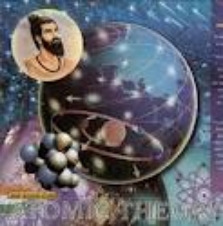
Philosophers of all over the world from ancient times , were trying to find out the composition and constitution of MATTER. Indian philosopher , MAHARISHI KANAD , studied a number of religious books particularly VEDAS thoroughly . He stated that if we go on dividing a particular matter , a stage will be ultimately reached when it may not be possible to break the matter further .He named the smallest indivisible portion of matter as PARMANU.
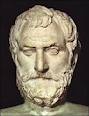
Long long ago it was 2,500 year's ago there lived a man named THALES (THAY leez )in Greece . He is cosidered as world's first Greek Philosopher - scientiest . He was genius person . He first tried to discover the basic unit of life or element of life and he said that WATER is basic unit of life which exist in three forms solid , liquid and gas .
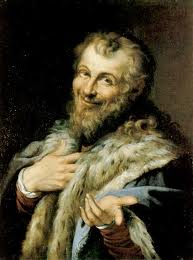
THERE IS AN ATOM SAY'S DEMOCRITUS ( duh MOK rih tus ) .He was a famous Greece philosopher ( 460 - 370 B.C.) . He said there had to be smallest substance in univerese that can not be cut up or destroyed and basic to every thing .He called that smallest substance ATOM from A- tomos which means uncutable .
Nothing exists said DEMOCRITUS but atom and void . He had a picture of atom in mind as solid compact and hard . Nothing can penetrate it
-
SUMMARY
- DEMOCRITUS the Greek philosopher who gave the idea of Democracy also gave his view about Atom
- Atom = uncut able but had no experimental support to the idea .
- No concept of electron , proton , neutron
- Atom considered as solid , indestructible
But DEMOCRITUS concept of Atomos was forgotten about 2000 years because the eminent philosopher of that time ARISTOTLE and PLATO favoured the Fire , Earth , Water and Air concept of matter.
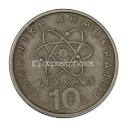
scintific models of atom on greek coin
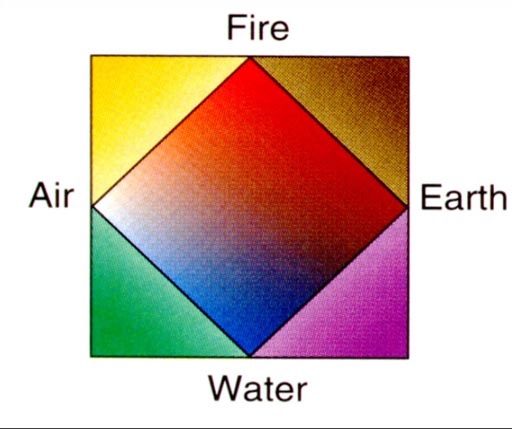
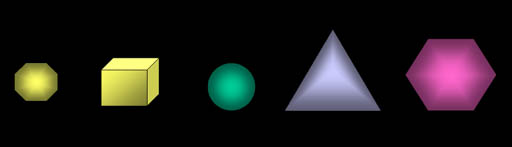
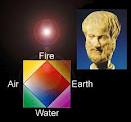
Aristotle thought different element have different shape.
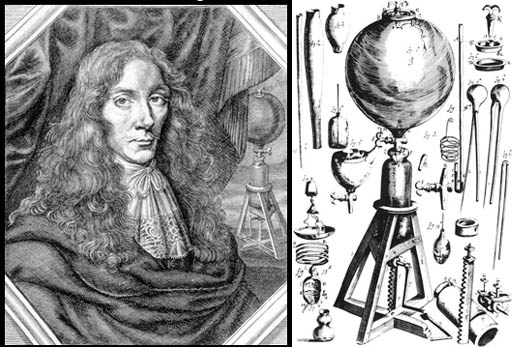
Born in IRELAND in 1627 ROBERT BOYLE was another famous chemist worked a lot on gaseous state of matter.He wrote a book called "Spectical Chemist" now available on
AMAZON.COM. His book urged chemist to abandon the view that elements are mystical substances .In other words he criticized the Aristotle's supernatural element and alchemy concept .He promoted his concept depends on observation and experimentation.
Boyle said the term element needs a precise meaning .An element is a substance not capable of being broken down or decomposed in to simpler substance.
Earth consists of simpler substance like Gold, mercury , iron etc . These are elements because they can not be broken down in to further simpler substance. Later French Scientist and Father of chemistry LAVOISIER further reinforce this concept . Sir Robert Boyle believed the corpuscular theory of matter and disagreeing with Aristotle. Corpuscular means air is made of particles like atom.
Boyle is most known for his work with gases .He discovered that air is required for combustion , respiration and for sound .In this way conclude about the nature of matter (gases ).
Aristotle account different nature of element is due to their different shape. He also proposed the concept of fifth element . He said that all heavily bodies like sun, moon were made of it .He also said that fifth element also turn in metal like Gold which can cure diseases and old age .It was start of ALCHEMY.
STM PICTURE OF AN ATOM
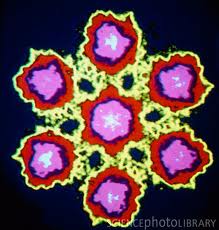
A scanning tunneling microscope (STM) is an instrument for imaging surfaces at the atomic level. Its development in 1981 earned its inventors, Gerd Binnig and Heinrich Rohrer (at IBM Zürich), the Nobel Prize in Physics in 1986. For an STM, good resolution is considered to be 0.1 nm lateral resolution and 0.01 nm depth resolution. With this resolution, individual atoms within materials are routinely imaged and manipulated. The STM can be used not only in ultra-high vacuum but also in air, water, and various other liquid or gas ambient, and at temperatures ranging from near zero kelvin to a few hundred degree Celsius. (KNOWLEDGE CORNER)
